
A very long surface interval
Recognition over recall in a high-stakes interface.
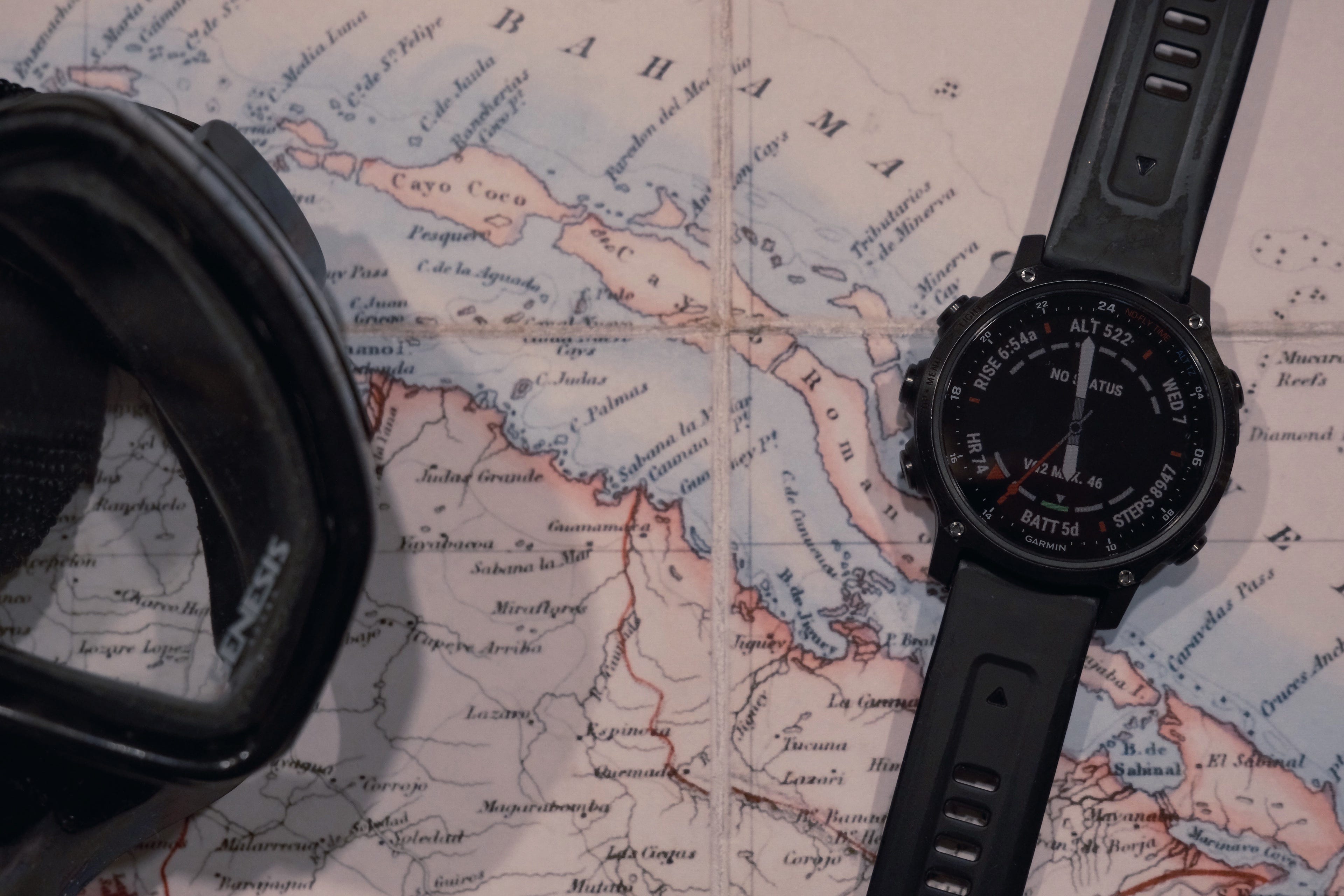
It’s been three years since my last scuba dive. Over the holiday break, I travelled to Cuba with my family and was able to find some time to dive a local reef. With two toddlers, I’ve gotten used to packing light when it comes to dive gear. I brought the tried and true, my mask & snorkel, fins, and my Garmin MK2s—my daily watch/fitness tracker/primary dive computer. I am regularly blown away by the amount of functionality packed into these devices.
We arrived at our dive site about 7km off shore, roughly half way between Cayo Coco and Cayo Paredon. For me, preparing for a dive always carries a sense of excitement and after a very long “surface interval” I was definitely feeling it. Before every dive, you perform a careful review of your equipment. You set up your gear, test that everything is working properly, and check and double check your air supply, but one thing you can’t really test until you’re submerged is your dive computer. Enough time had passed since I last used this feature that I didn’t really remember what the interface looked like or all of the info it would contain, I just trusted it.


Geared up, we jumped off the boat one by one. After a dive signal from our dive master we began our descent to the coral reef faintly visible below us. Just past 1m below the surface my Garmin detected the change in pressure and kicked into Single Gas diving mode.
In that moment the watch I use daily transformed into a critical piece of diving safety equipment. The interface stripped away all that was unnecessary and presented only the most critical information. Everything was immediately clear and unmistakable. The display featured my no decompression limit and depth as the primary data followed by dive time and temperature and N2 build-up and ascent/descent rate.
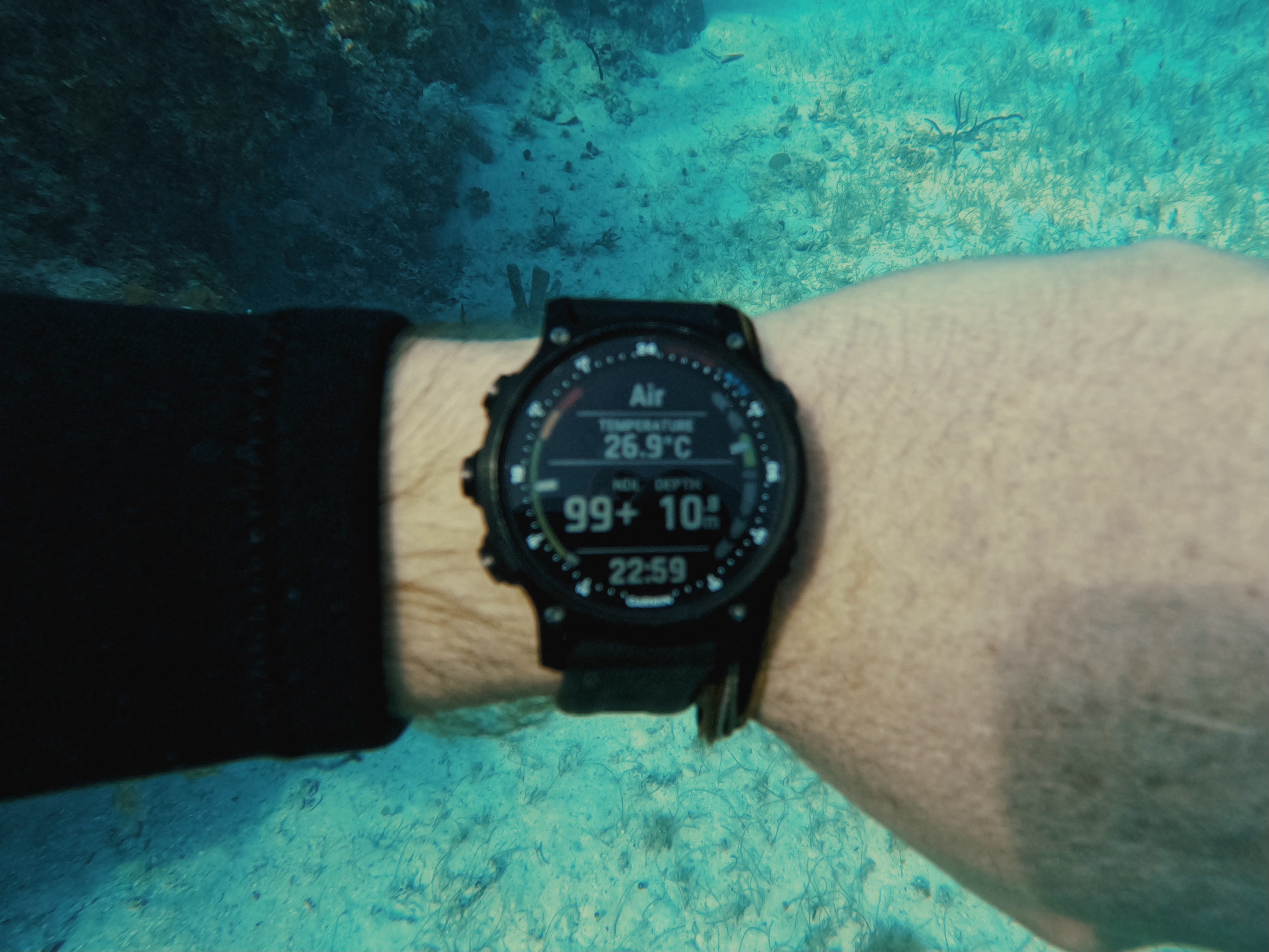
There was no Garmin specific design language or concepts I needed to remember. Universal patterns of shape, size and color made the interface intuitive, instinctual. Large numbers are important, smaller numbers are secondary. A gauge chart indicated my ascent/descent rate. It followed physics: up is up, down is down, red is bad, green is good, it required zero translation. Tactile and audible feedback kept me aware even if I wasn’t looking at the device. The design of the experience relied on recognition of fundamental patterns rather than the recall of specific functionality or proprietary concepts.
As I hovered around coral heads, rocky swim-throughs, and kept an eye out for major life-forms, I’d glance at my computer to keep track of the dive—admiring the clever design and form factor of this incredible tool.
After about 40 minutes my air supply dwindled and it was time to begin our ascent to the surface. A basic rule of thumb is to ascend no faster than your smallest bubbles, I got a few pings from the Garmin to keep me on track as we headed to the safety stop at five meters. Here the interface changed again to bring attention to the 3 minute countdown timer. With a final beep and an all clear we surfaced.
In my day job, I strive for my products to feel intuitive. I aim to simplify, reduce clutter, and focus attention, usually the stakes are much lower than they are underwater. This interaction was a welcome reminder that truly intuitive design doesn’t just make you think less—it inspires trust, confidence, and feels like something you always knew.
Cheers,
M